AGM papers can be found HERE
Papers, including the Annual Report and accounts, will also be available at the meeting.
Attendance is free, but booking is advised.
As well as the AGM’s usual business – reviewing the year’s activities, confirming accounts, approving last year’s minutes, electing trustees and AOB raised by members – there will also be a
TALK on the work of the Norfolk and Norwich Archaeological Society by Sophie Cabot, Honorary Secretary.
AGM papers can be found HERE
Papers, including the Annual Report and accounts, will also be available at the meeting.
Attendance is free, but booking is advised.
Battered by storms and bad weather, launching new flights from its airport and loving leg warmers like everyone else, Norwich fully embraced the 80s.
The Norwich Beer Festival became an annual event and The Argyle Street Alternative Republic came to an end. Ritzy’s was the place to go, and new places to eat eclipsed the Berni of the 70s. Our interior decor became more colourful and some of our fashion choices became more questionable.
Pete Goodrum returns to lead us through another decade of the city’s history with his customary mix of historical fact and social comment. Brace for nostalgia!
Pete Goodrum is a writer and broadcaster, and author of several books on local history. He frequently broadcasts on radio, on a range of subjects and gives talks based on his books
Learn all about these well-known authoresses and the impact they had. Visit places in the City related to them. Hear amusing tales about their work and lives. To include Anna Sewell, Amelia Opie, Margaret Paston, Harriet Martineau, Elizabeth Fry, Delia Smith and Julian of Norwich. Hear amusing tales about their work and lives. A variety of styles and some amazing legacies.
Three major fires in the city centre all took place on the same date within 100 years of each other. On a circular tour discover the unlucky date and learn more about the fires that have ravaged Norwich. We will also explore some of the city's water courses and wells and learn more about how floods have affected the city.
When it was completed in the 12th century, Norwich Cathedral was one of the most imposing buildings in England, a symbol of Norman piety – and power. But how did they build it? How was the ground plan for this mighty cathedral devised? How did the masons source, design, shape, mark and bond the stones to produce this wonderful building? And how did the woodworkers craft, mark and assemble the remarkable wooden furnishings?
Join us on this tour to discover the answers to the above questions, as well as some surprises along the way!
Ask at Norwich Cathedral’s reception desk in the Hostry where to meet.
Learn all about these well-known authoresses and the impact they had. Visit places in the City related to them. Hear amusing tales about their work and lives. To include Anna Sewell, Amelia Opie, Margaret Paston, Harriet Martineau, Elizabeth Fry, Delia Smith and Julian of Norwich. Hear amusing tales about their work and lives. A variety of styles and some amazing legacies.
A repeat tour.
Norwich Market has traded from the same site since the 11th century. It has survived because it has adapted to meet changing conditions – and change is yet again on the agenda. This morning Frances and Michael Holmes will tell its remarkable story.’
Frances and Michael have researched and written a number of local history books. They operate as Norwich Heritage Projects and full details of their work can be found on their website www.norwich-heritage.co.uk
When it was completed in the 12th century, Norwich Cathedral was one of the most imposing buildings in England, a symbol of Norman piety – and power. But how did they build it? How was the ground plan for this mighty cathedral devised? How did the masons source, design, shape, mark and bond the stones to produce this wonderful building? And how did the woodworkers craft, mark and assemble the remarkable wooden furnishings?
Join us on this tour to discover the answers to the above questions, as well as some surprises along the way!
Ask at Norwich Cathedral’s reception desk in the Hostry where to meet.
Three major fires in the city centre all took place on the same date within 100 years of each other. On a circular tour discover the unlucky date and learn more about the fires that have ravaged Norwich. We will also explore some of the city's water courses and wells and learn more about how floods have affected the city.
Learn all about the ancient ritual of marking the bounds with their amusing traditions. Enjoy identifying many of the remaining Markers displayed around the City. See and understand how the different Church architecture has played its part along the route covering 8 churches.
Learn all about the ancient ritual of marking the bounds with their amusing traditions. Enjoy identifying many of the remaining Markers displayed around the City. See and understand how the different Church architecture has played its part along the route covering 8 churches
The decision to demolish Bishop Bridge was the catalyst that brought the Norwich Society into being in 1923. This is the story of how they managed to save this part of our Heritage. We will take a virtual tour around Norwich covering many of the other successful campaigns to protect Norwich’s heritage, (as well as some failures). Without the Society’s activities, Norwich would look a lot different today.
Jonathan Hooton is a City of Norwich tour Guide, a former Head of Geography at Notre Dame High School and a regular feature in the Society’s Events Programme.
This talk is about some of what can been seen around the city that tells you about times past. This includes plaques, boundary markers, street name signs, flood level markers and some memorials. John will also talk separately about war memorials.
John Trevelan has lived in Norwich for over 25 years. He is a member and post Chair of the Society’s Civic Environment Committee. John has led on a number of research projects including: Telling the Time in in Norwich, and produced self-guided walking trails including: Clocks and Sundials Trail. Both of these can be found on the Society’s website.
This talk is part of the Norwich History Festival
The open space at the west side of Norwich Cathedral is today an oasis of calm in a busy city. But this space has not always been so - from a bone depository to a bell tower, medieval tourist shops and an early food bank, the early Close was a busy place, full of monastic life and the people tasked to support it. Through history, buildings have changed use; others have disappeared; dangers have come and gone. Join us to step back in time as we discover the history of this space on our time traveler’s adventure.
Meet in front of the West End of Norwich Cathedral.
The open space at the west side of Norwich Cathedral is today an oasis of calm in a busy city. But this space has not always been so - from a bone depository to a bell tower, medieval tourist shops and an early food bank, the early Close was a busy place, full of monastic life and the people tasked to support it. Through history, buildings have changed use; others have disappeared; dangers have come and gone. Join us to step back in time as we discover the history of this space on our time traveler’s adventure.
Meet in front of the West End of Norwich Cathedral.
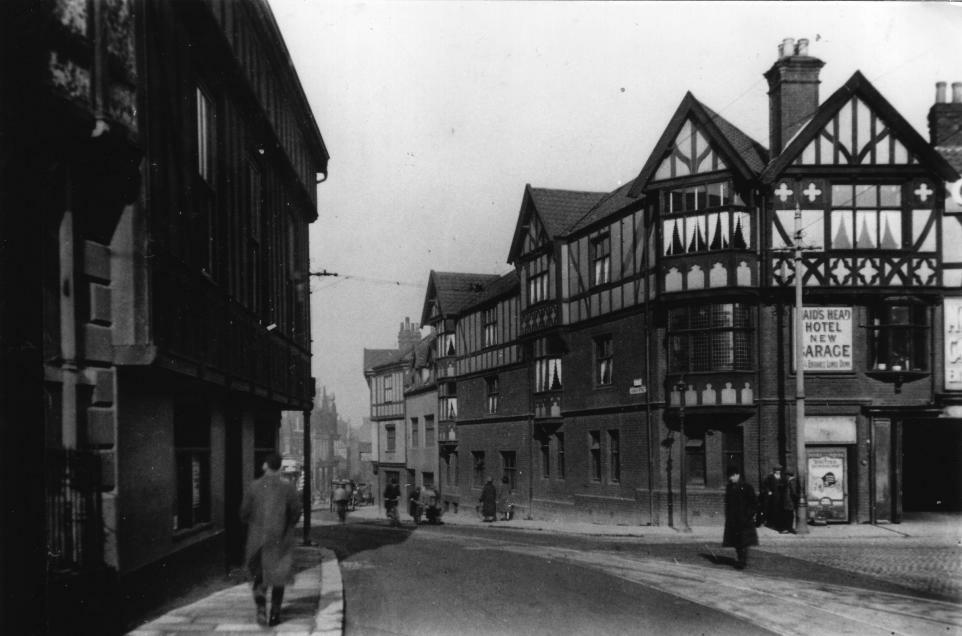
As an important medieval City, Norwich still has many alleyways away from the major road network. Many of these alleyways have an interesting story to tell.
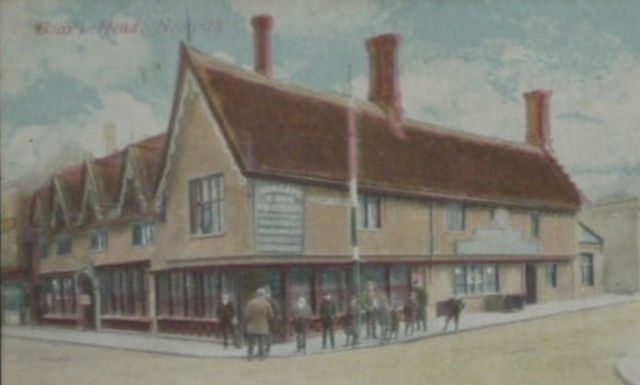
This route will introduce some of these stories in a guided walk from the Market place towards eastern Norwich. It is an almost circular route, returning to the bottom of Westlegate once the tour is over. The secrets of Weaver’s Lane, Boar’s Head yard, the origin of the name of Winall’s Yard, Chapel Loke, Lady Julian’s cell, Old Barge yard, Stepping Lane and Grouts yard, will all be revealed.
Meet outside the tower of St Peter Mancroft opposite the Forum. End at the bottom of Westlegate. This should take about 1 ½ hours and is on reasonable footways although there will be several slopes and steps involved in the walk.